What are the benefits of a deep facial cleanse? It removes what daily cleansing can't reach (built-up oil, dead skin cells, makeup residue and pollution), leaves skin more even and radiant, and prepares it to make better use of your home routine. It isn't a medical treatment and it doesn't work miracles, but done well and properly spaced it is one of the basics of facial care.
This article explains what it improves, how the protocol works at our centre, how often to have one, and when a professional should assess your skin first.
Content reviewed by Pilar Romero, November 2026.
Real benefits you can expect
Skin types respond differently, but in most cases a deep facial offers:
- —Removal of built-up impurities: excess oil, dead cells, makeup residue and pollution.
- —More even texture and a brighter look: freeing the follicles and renewing the surface makes skin look fresher.
- —A better response to your home routine: serums and creams absorb better on well-prepared skin.
- —More comfort in congested skin: especially if you are prone to breakouts, blackheads or a heavy feeling.
What it cannot do: remove deep wrinkles, change your phototype or replace dermatological treatment. The right expectation is an aesthetic reset.
How the protocol works at Pilar Romero
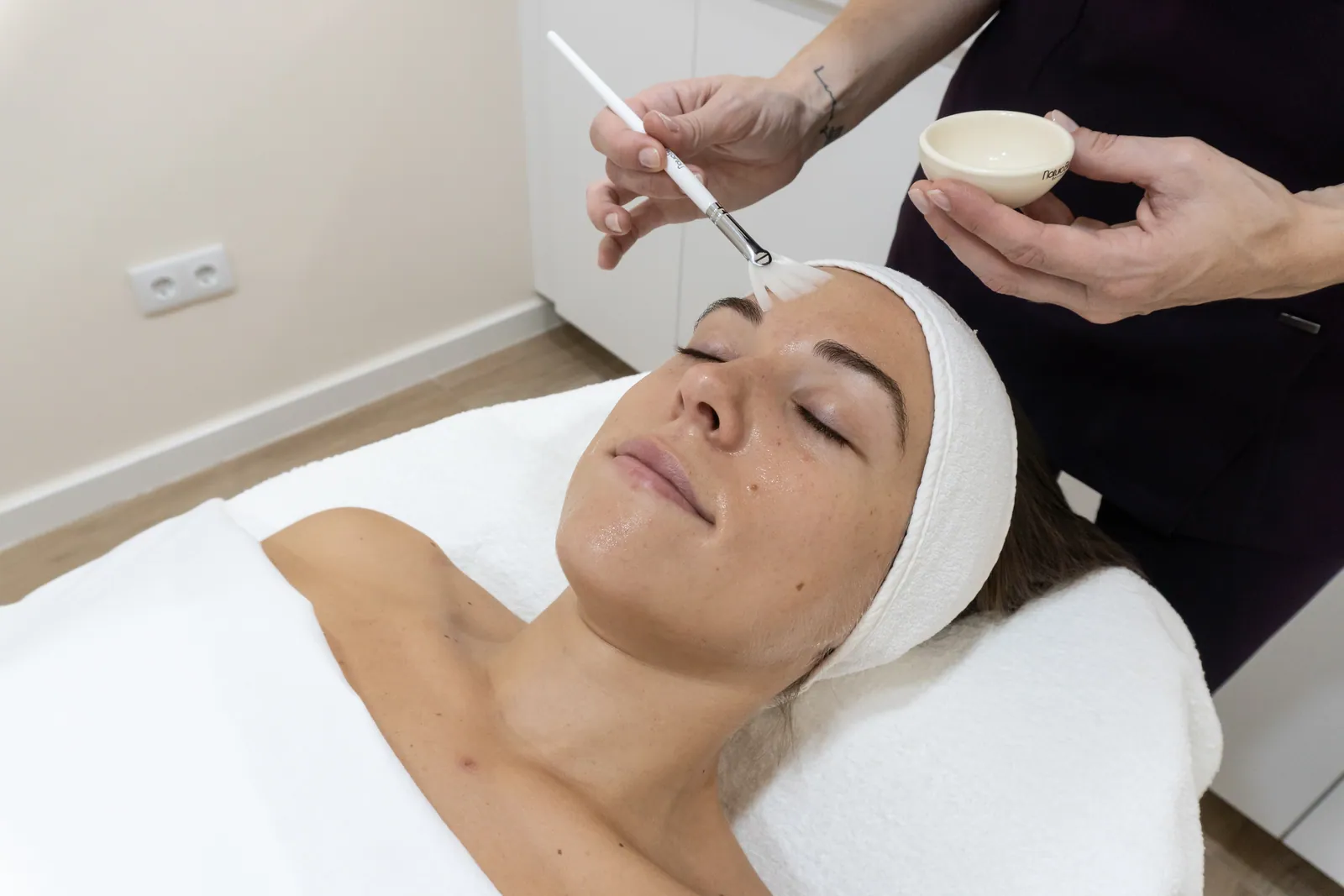
A session lasts 60 to 90 minutes, depending on your skin's condition and what it needs that day. It isn't a fixed routine: we personalise it.
- —Skin assessment: we look at your skin type, its current state and anything that suggests adapting or postponing treatment.
- —Cleansing and preparation: we remove makeup and surface impurities and prepare the skin.
- —Exfoliation and softening: with products suited to your skin, to make pore cleansing easier.
- —Extraction: removal of blackheads where needed, with proper technique and without forcing the skin. This is the part that can feel a little uncomfortable.
- —Calming and balancing: a mask and soothing or hydrating actives according to your skin.
- —Protection: finished with moisturiser and sunscreen.
We work with premium brands such as Natura Bissé and adapt intensity and products to your skin.
Which skin types is it suited to
It adapts to practically all skin types, though the protocol changes:
- —Combination or oily skin: the most common candidate. Benefits from extraction and oil regulation.
- —Normal skin: as seasonal maintenance, especially around temperature changes or stressful periods.
- —Dry skin: with gentler products and no aggressive extraction, to protect the skin barrier.
- —Sensitive skin or rosacea: intensity is adapted, or treatment is postponed if there is active inflammation. Always with a prior assessment.
Suggested frequency
One of the most common mistakes is doing it too often, thinking "more is better":
- —Oily or breakout-prone skin: every 4–6 weeks.
- —Stable combination skin: every 6–8 weeks.
- —Normal skin: every 8–10 weeks, or as seasonal maintenance.
- —Dry or sensitive skin: with a gentle protocol, usually every 10–12 weeks.
These are guidelines. At your assessment we'll tell you what suits your skin.
Aftercare
The first 48 hours matter for protecting the result:
- —Avoid strong exfoliants, physical or chemical, for at least 48 hours.
- —Broad-spectrum sunscreen daily: freshly treated skin is more vulnerable.
- —Basic hydration with soothing, fragrance-free products.
- —No heavy makeup for the rest of the day if the session included extraction.
- —Don't touch or extract anything yourself.
When a professional assessment should come first
Tell us when booking if any of these apply, as they may change the protocol or mean waiting:
- —Active inflammatory acne, cysts or open lesions.
- —A rosacea or dermatitis flare-up, or very irritated skin.
- —Isotretinoin or other medication that sensitises the skin.
- —A recent peel, laser or facial treatment.
- —Sunburn or a deep tan.
- —Moles or spots that have changed: in that case, see a dermatologist first.
Why choose a specialist centre in San Vicente del Raspeig?
Doing it at home with the wrong products can aggravate sensitive skin, or cause marks and infections if blackheads are extracted without technique. At Pilar Romero Skincare & Beauty we have over 15 years of experience tailoring facial protocols. Our centre is in San Vicente del Raspeig, a few minutes from central Alicante.
Frequently asked questions
How long does a deep facial cleanse take? Between 60 and 90 minutes, depending on your skin.
Does it hurt? Extraction can feel a little uncomfortable, especially on very congested skin. It isn't painful and the redness afterwards fades within hours.
Can I have one with active acne? It depends. With mild acne or stable papules, usually yes; with inflammatory breakouts or cysts we adapt or postpone the protocol to avoid spreading inflammation.
When will I see results? Skin usually looks brighter the same day, with the full effect at 48–72 hours, once it has finished recovering.
How often should I repeat it? Every 4 to 12 weeks depending on your skin type (see above).
Can I wear makeup afterwards? Better to wait until the next day. If you must, use light, fragrance-free products.
Sources
- —American Academy of Dermatology (AAD): everyday skincare basics
https://www.aad.org/public/everyday-care/skin-care-basics - —AAD: sun protection recommendations
https://www.aad.org/public/everyday-care/sun-protection
To improve your skin's texture and health, see our facial treatments page or book online. In winter you may also like our autumn and winter skincare guide.
Do you want us to help you?
Contact us and we will review your case with a practical action plan.